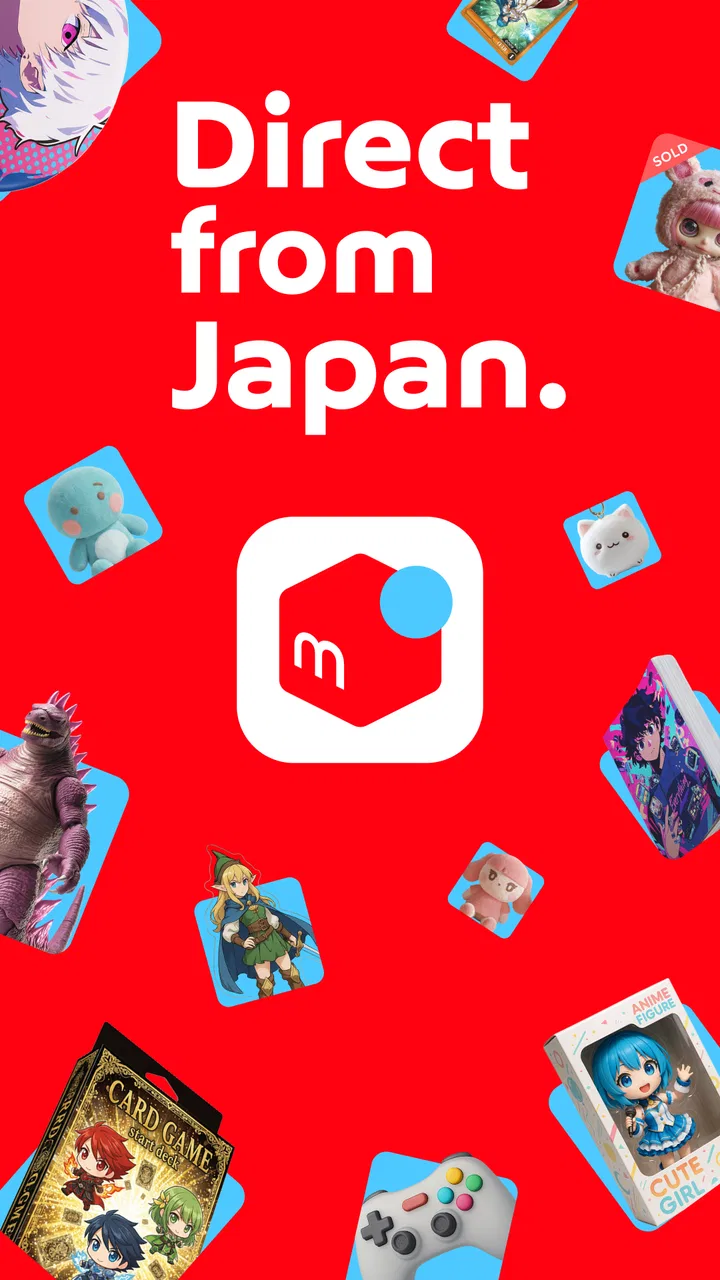
Mercari Japan: Anime Shopping
- 4.1
- Rating
- 500.00K
- Installs
- Free
- Price

 Analysis by App-foxy
I came to Mercari Japan: Anime Shopping expecting a focused way to browse Japanese anime collectibles, but the app feels more like a doorway into a very large secondhand marketplace. Its appeal is immediate: instead of searching only for newly released merchandise, I can look for older trading cards, idol goods, character items, and other pieces that are much harder to find through ordinary retail apps. That makes the first few sessions genuinely exciting, especially if I already know the Japanese name of a series, character, performer, or product line.
The important question, though, is whether that excitement survives after the first week. In my experience, this app has lasting value for collectors who enjoy searching, comparing, and waiting for the right listing. It is less convincing for someone who wants a quick, predictable shopping trip with clear international checkout and minimal research. Mercari, Inc. has built an app aimed at a very specific kind of shopper: one who is comfortable exploring a marketplace rather than simply adding a new item to a cart.
What the first week feels like
The strongest early impression is the depth of the catalog. The store summary points toward rare ACGE goods, trading cards, and idol merchandise from Japan, and that focus is easy to understand once I start browsing. The app is most interesting when I search for something specific but not especially easy to find outside Japan. A common retail store may show current releases, while this marketplace can lead me toward older items, incomplete collections, duplicate cards, fan goods, or merchandise that has already disappeared from regular shelves.
You May Also Like

 AccuWeather: Weather Radar
AccuWeather Review: A Quick, Clear Forecast for Everyday Decisions
For everyday plans, the best forecast is the one you can understand quickly. AccuWeather makes rain timing, radar, and local conditions easy to act on, with a few trade-offs.

 Hill Climb Racing
Why Hill Climb Racing Still Turns Crashes Into One More Run
A tiny car, a bumpy hill and one more upgrade: Hill Climb Racing keeps resurfacing because its simple chaos makes every near-miss feel personal.

 AliExpress - Shopping App
AliExpress Makes Global Shopping Feel Personal, but Shoppers Bear the Risk
AliExpress turns a global marketplace into a pocket-sized discovery engine. Its reach is useful, its shopping loop compelling, and its trade-offs easy to miss.

 Lords Mobile: Kingdom Wars
Lords Mobile Is a Kingdom-Building Routine, Not a Quick Match
A case-by-case verdict on the building, battles, device demands, and social commitments that make Lords Mobile rewarding for some players and exhausting for others.

 PDF Scanner app - TapScanner
TapScanner Makes Paperwork Easier to Capture, Check, and Share
TapScanner makes scanning with a phone feel less like a rescue operation and more like a dependable step in getting work done. Its capture tools are useful, though not flawless.

 Block Blast!
 Shows How Much a Puzzle Game Can Leave Out
A quiet grid game shows why puzzle players increasingly value instant clarity, repeatable skill and low-pressure play—and where the genre still needs to catch up.
More From Our News Desk
View All News


That variety changes how I shop. I do not use it like a standard fashion or electronics store where I decide what I want and expect several identical units to be waiting. I use it more like a constantly changing noticeboard. One listing may be worth saving, another may be overpriced, and a third may be the exact item I have been trying to identify for months. The reward comes from recognizing the good listing before it disappears.
During the first week, I would recommend beginning with narrow searches rather than broad terms. Searching for a whole franchise can produce an overwhelming mix of cards, books, keychains, promotional items, and unrelated fan merchandise. A character name, Japanese title, event name, or exact product wording is more useful. If I am collecting trading cards, I also pay attention to the set or series wording instead of relying only on the character pictured. That small change makes browsing much less tiring.
The app is free to install, which makes experimentation easy. It is rated for mature users aged seventeen and above, so I would not treat it as a casual children’s shopping app even if the merchandise itself is aimed at younger fans. The current version is 1.60.0 and it runs on Android 8.0 or later. Those details make it accessible to many Android users, but they do not remove the need to think carefully before buying from a marketplace built around individual listings.
Why collectors notice it quickly
The first-week appeal comes from discovery rather than presentation. I can spend a few minutes looking for one card and end up learning that several variations exist, that a promotional version is different from a regular release, or that a character appears on goods I had never seen before. That kind of browsing is much more rewarding here than in a conventional shopping app with a small, neatly organized inventory.
There is also a useful emotional difference between buying a current product and finding an older one. A new item is usually easy to understand: it has a fixed product name, a standard package, and a predictable retail context. A secondhand listing may require me to identify the edition, inspect the condition, and decide whether the seller’s description matches what I want. That extra work is a weakness for convenience, but it is also what gives the search its collector appeal.
My practical advice is to create a personal search routine early. I would start with a short list of priority terms, then check alternative spellings and the original Japanese title when possible. I would also separate “must have” items from “interesting if cheap” items. Without that distinction, the app can turn every attractive listing into a reason to spend, and the first-week novelty can quickly become an unplanned shopping habit.
Does it remain useful month after month?
For me, the long-term value depends on whether I am collecting a theme. If I am simply looking for one anime gift, the app may be useful for a short search and then become unnecessary. If I am building a card set, following a particular idol group, collecting one character, or hunting older goods, the changing inventory gives me a reason to return. The marketplace format means that new opportunities can appear even when I have already searched the same subject before.
That does not mean every monthly visit will be productive. Secondhand inventory is uneven, and a search can produce either an excellent match or a long list of items that are too expensive, incomplete, poorly described, or simply irrelevant. I see the app as a place to monitor rather than a guaranteed source. The habit works best when I check occasionally with a clear target instead of opening it repeatedly whenever I feel bored.
A useful long-term workflow is to keep a simple external note of the items I already own, the versions I still need, and the maximum amount I am comfortable paying. This is particularly important for trading cards and idol goods, where similar-looking products can belong to different releases. The app may help me find candidates, but it cannot replace my own collection records. That small maintenance task prevents duplicate purchases and makes the search more satisfying.
I also think the app has value as a price-awareness tool, with an important caution. Seeing several listings can help me understand how sellers position similar goods, but a listing price is not automatically a fair market price. A rare-looking item may be expensive because of condition, packaging, scarcity, or simple seller preference. I compare multiple results and look closely at what is actually included before treating any amount as a useful reference.
When the marketplace beats ordinary alternatives
Compared with a normal retail shopping app, this is the better choice when the item is older, region-specific, discontinued, or connected to a niche fandom. Retail apps are usually better for current releases, standard products, quick delivery expectations, and buying several identical items. Mercari Japan is more compelling when the search itself matters and when I am willing to consider pre-owned goods.
Compared with a broad international marketplace, the advantage is its Japanese focus. That can make the selection feel more relevant for Japanese anime and idol collecting instead of forcing me to filter through unrelated listings. The trade-off is that I may need more patience with terminology, item condition, seller descriptions, and the practical details of obtaining an item from Japan. A broad marketplace may be easier for familiar checkout and local purchasing, even when its selection is weaker.
Compared with specialist collector stores, this app can offer more variety and more unexpected finds, but a specialist store may provide a calmer buying experience. A specialist retailer generally gives me clearer product information and a more consistent standard. Here, the appeal is the possibility of finding something unusual, not the promise that every listing will be equally easy to evaluate.
The maintenance work behind a good collection
The biggest ongoing burden is not installing or opening the app; it is making sensible decisions inside a changing marketplace. I need to read each listing rather than assuming that a familiar character image means I am getting the exact version I want. For cards, I check the set wording and any visible edition details. For idol goods, I pay attention to whether the listing concerns one item, a group of items, or a bonus that may not be included in the original package.
Condition deserves its own step. A photograph can show the front of a card or the main design while leaving edges, corners, backs, packaging, or small marks difficult to judge. I do not treat a clean-looking thumbnail as a guarantee of near-perfect condition. When the item matters to my collection, I slow down and inspect every available detail before deciding. That habit is more important here than it would be in a standard store selling factory-sealed stock.
I also keep a record of why I am buying something. That sounds excessive for a small collectible, but it helps me distinguish a genuine gap in my collection from a temporary impulse. I write down whether an item completes a set, replaces a damaged piece, or is simply attractive. If I cannot explain the purchase after a day or two, I usually do not need it. This is one of the best ways to keep the app useful month after month instead of letting it become a stream of tempting images.
Another practical issue is international context. A Japan-focused marketplace may be excellent for discovering goods, but the real effort can come after finding them. I consider whether the item can be obtained in my location, whether the transaction process is comfortable for me, and whether the total cost still makes sense after all practical expenses. I do not assume that a low-looking listing price makes the final purchase inexpensive. For a rare item, the overall effort may be justified; for a common keychain, it may not be.
Three habits that improve the experience
- Search in layers: begin with the exact character or product term, then broaden only if the results are too narrow. This reduces the time spent sorting through unrelated merchandise.
- Separate rarity from condition: a hard-to-find item is not automatically a good purchase if it is damaged, incomplete, or different from the version I collect.
- Use a waiting rule: save interesting candidates in my notes and revisit them later instead of treating every appealing listing as urgent. This protects both my budget and my collection’s focus.
These habits also answer a question many new users have: do I need to be a serious collector to enjoy the app? No, but I do need a willingness to inspect and compare. A casual shopper can find a memorable gift or a favorite character item, yet the experience becomes frustrating if I expect the app to behave like a polished catalog with identical stock and simple decisions.
Where fatigue starts to replace discovery
The same endless variety that makes the app exciting can eventually become its main source of fatigue. After several searches, I may see repeated listings, slightly different versions of the same product, or goods that are visually similar but not interchangeable. The work of filtering can outweigh the pleasure of browsing, especially when I return without a specific goal.
Language and naming can add another layer of effort. Japanese merchandise often has product names, abbreviations, event references, and character spellings that are not obvious from an English search. Even when I recognize the franchise, I may need to try more than one wording to find the relevant listings. That is manageable for a dedicated collector, but it is a real barrier for someone who wants instant results.
There is also a psychological risk in the marketplace format. Scarcity can make an item feel more urgent than it really is. When only one interesting listing appears, I may worry that waiting means losing it forever. Sometimes that is true, but sometimes the item is merely one version among many. I find the app healthier when I decide my priorities before browsing and accept that not every rare-looking opportunity deserves a purchase.
This is also where the app may not be the right choice. I would skip it for a last-minute present, a guaranteed new product, or a purchase where condition must be completely predictable. I would also choose a conventional retailer when I want a simple return process, clear local delivery expectations, or a product that is still widely available. The marketplace is strongest when discovery and selection matter more than speed and uniformity.
The mature age rating is another reason I would guide younger users toward an adult-managed shopping process. Even apart from the merchandise, buying from a marketplace requires judgment about listings, spending, and the practical side of obtaining goods. I would not hand the app to a child and assume that the interface alone makes every purchase straightforward.
My long-term verdict
After the novelty fades, I still see a place for Mercari Japan: Anime Shopping, but not as an everyday browsing app for everyone. Its lasting value comes from focused collecting. If I have a particular anime, trading card line, idol, or character in mind, the app can become a useful part of my search routine because it exposes me to goods that ordinary retail channels may not carry. The store reports an average rating of 4.1 from around 2.1 thousand ratings, and its reach has passed 500 thousand installs, which fits my impression of a specialized app that has found an audience without feeling like a general-purpose shopping giant.
I would keep it installed if I were actively building a collection or regularly hunting Japanese fan goods. I would probably remove it after a one-time purchase if my only goal were to find one item quickly. The free price makes trying it low-risk, but the real cost is attention: checking descriptions, comparing versions, tracking what I own, and resisting purchases that do not fit my plan.
My final recommendation is therefore conditional but positive. Install it if you enjoy the hunt and are prepared to treat every listing as something to evaluate, not an automatic bargain. Use a regular retail store when convenience, certainty, and speed come first. For collectors who accept the maintenance, the app earns lasting space by turning hard-to-find Japanese goods into an ongoing search rather than a one-off shopping trip. That is its strongest quality, and also the reason it will not suit people who want shopping to be effortless.
Mercari, Inc. has made a focused shopping app with a clear identity: it is for discovering Japanese merchandise through a marketplace shaped by individual listings. I would recommend it to a friend who enjoys anime collecting, understands the difference between rarity and value, and is willing to be patient. I would warn that friend not to confuse a large selection with an easy selection. Used thoughtfully, it can remain useful long after the first exciting search; used without a plan, it can become more tiring than rewarding.
FAQs for Mercari Japan: Anime Shopping
01What is Mercari Japan: Anime Shopping?
Mercari Japan is a marketplace where users can buy and sell new and pre-owned items, including anime figures, manga, trading cards, character goods, cosplay products, games, and limited-edition merchandise. The app is especially useful for finding Japanese collectibles that may be difficult to locate through regular international stores. Listings are created by individual sellers, so product condition, pricing, availability, and seller reliability can vary considerably.
02Can users outside Japan purchase items through Mercari Japan?
International access depends on the version of Mercari available in your region and on supported purchasing or proxy services. Many Japanese listings are intended for domestic buyers, and overseas shoppers may need an authorized forwarding or proxy service to purchase, pay for, and ship items internationally. Before downloading, check whether the app supports your country, payment method, shipping destination, and language preferences, because availability can differ by location.
03Are the anime products on Mercari Japan new or used?
Both new and used products are available, and the listing description should explain the item's condition. Collectibles may show signs of handling, faded packaging, missing accessories, scratches, or storage wear, even when described as being in good condition. It is important to review photographs, seller comments, included items, and Japanese condition terms carefully before buying. When details are unclear, contacting the seller or using a purchasing service may be advisable.
04How do payment, shipping, and customs work when buying from Mercari Japan?
Payment and delivery procedures depend on whether you are buying directly through a supported regional service or using a proxy buyer. Costs can include the item price, domestic shipping, service fees, international postage, insurance, and possible customs duties or taxes. Some sellers ship only within Japan, while fragile figures and large merchandise can be expensive to forward. Review the complete estimated cost before confirming an order.
05Is Mercari Japan safe for buying anime merchandise?
Mercari Japan includes marketplace protections and seller ratings, but buyers should still approach every transaction carefully because listings come from individual users. Check the seller's history, photos, description, item condition, and cancellation or return rules before purchasing. Be particularly cautious with expensive figures, signed goods, rare cards, and branded merchandise, since counterfeit or misleading listings can appear on any large marketplace. Use official payment and proxy channels rather than sending money privately.
Pros
- Large selection of anime figures
- manga
- games
- and character goods
- Useful search filters make it easier to find specific collectibles
- Seller ratings help assess reliability before making a purchase
- Secondhand prices can be lower than those in specialist stores
- In-app messaging lets buyers clarify item details with sellers
Cons
- Many listings are written only in Japanese
- Shipping costs can significantly increase the final price
- Item condition may vary from the seller’s description
- Popular collectibles can sell out before you complete checkout
- International purchasing may require a proxy service or Japan address

Mercari Japan: Anime Shopping
Gallery